

Blog > Ready to live off the grid?
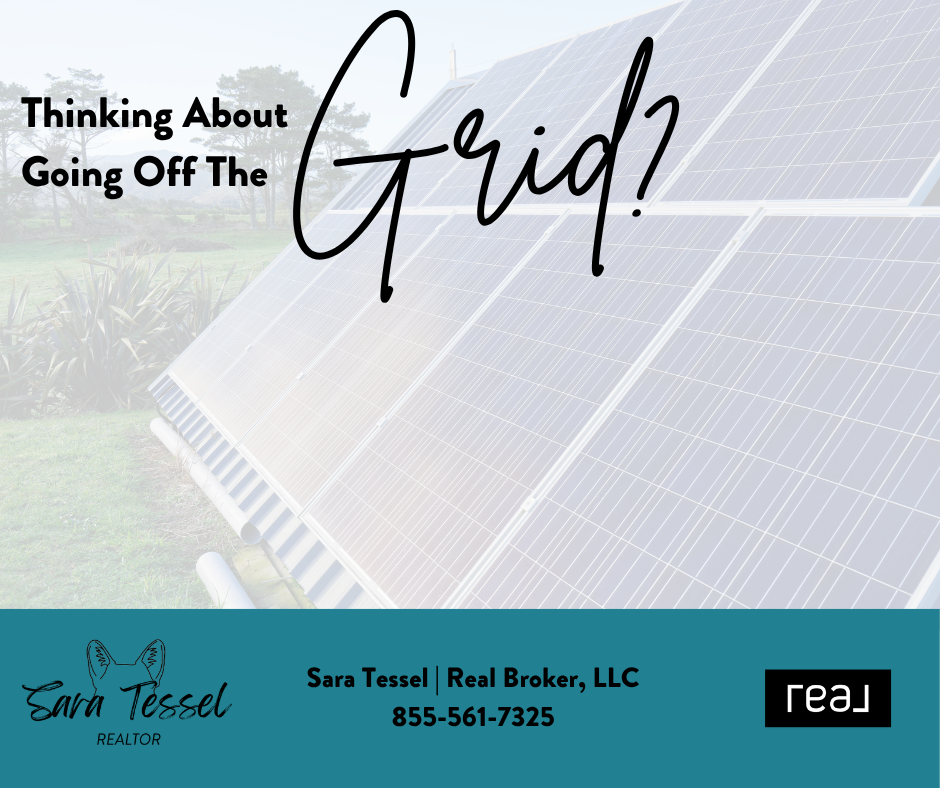
Want to Live Off the Grid? Your Options for Rural Living in Northern Virginia
Maybe you've had enough of traffic (accurately depicted at the beginning of my latest podcast).
Maybe you're tired of looking into your neighbor's windows, hearing lawn equipment every Saturday morning, or worrying about HOA rules every time you want to make a change to your property.
Or maybe you've simply reached a point where the idea of owning more land, more privacy, and fewer neighbors sounds pretty appealing.
For buyers looking to escape traditional suburban life, Northern Virginia has more rural and semi-off-grid living opportunities than you might expect.
You don't necessarily have to move several hours away to find a property where you can have acreage, a well, a septic system, solar power, a garden, animals, or simply some peace and quiet.
Here's what to consider if you're thinking about moving to a rural or off-grid property in Northern Virginia.
What Does "Off the Grid" Actually Mean?
While sometimes used off-the-cuff just to mean living far from cities and suburban areas, "Off-grid" can mean different things to different people.
For some buyers, it means completely disconnecting from public utilities and generating their own electricity and water.
For others, it simply means finding a rural property with several acres, a private well, septic system, and enough space to become more self-sufficient.
There is a big difference between living off the grid and simply living in a rural area.
An off-grid property might include:
- Solar panels and battery storage
- Well water
- Septic systems
- Propane
- Backup generators
- Wood-burning or alternative heating
- Rainwater collection
- Gardens
- Agricultural or livestock areas
- Limited or no municipal utility connections
You can also create a hybrid lifestyle which would entail staying connected to the electric grid while using solar, backup batteries, generators, gardens, and other systems to become more self-sufficient.
Where Can You Find Rural Properties in Northern Virginia?
If your goal is more land and fewer neighbors, you'll generally want to look beyond the most densely developed parts of Northern Virginia.
Western Loudoun County
Western Loudoun can be an excellent place to start for buyers looking for larger properties, farms, equestrian estates, historic homes, and rural surroundings.
Areas around Aldie, Middleburg, Purcellville, Bluemont, Hamilton, and western Leesburg can offer a dramatically different lifestyle from the more suburban portions of the county.
You'll find everything from modest rural homes to substantial farms and estates.
Fauquier County
For buyers who really want to get away from suburban development, Fauquier County deserves a serious look.
Communities around Marshall, Warrenton, The Plains, Delaplane, and Upperville offer opportunities for larger parcels, farms, equestrian properties, and homes surrounded by open land.
The further west you go, the more likely you are to encounter properties where acreage and privacy become major selling points.
Parts of Prince William County
Prince William County isn't uniformly suburban.
Its western and southwestern portions include rural areas where buyers can find larger parcels, farms, wooded properties, and homes that feel far removed from the more developed parts of the county.
This can be an interesting compromise for someone who wants rural living while remaining relatively close to Northern Virginia employment centers.
Southern and Western Areas Outside the Traditional Suburbs
If you're willing to expand your definition of Northern Virginia, your options increase considerably.
Counties farther from Washington, D.C. can provide substantially more land for your money and more opportunities for agricultural, recreational, and self-sufficient lifestyles.
For some buyers, moving another 30–60 minutes farther from the urban core can make a dramatic difference in the type of property available.
What Types of Rural Properties Should You Look For?
The good news is that you don't necessarily need to build an off-grid homestead from scratch.
There are several types of properties that may already provide the foundation for the lifestyle you're looking for.
- Small Farms and Homesteads
A small farm can be an ideal starting point for someone interested in greater self-sufficiency.
Depending on the property, you might have enough land for:
- Vegetable gardens
- Fruit trees
- Chickens
- Goats
- Horses
- Beekeeping
- Small livestock
- Greenhouses
- Outbuildings
Not every property is zoned for every agricultural use, however, so buyers should investigate local zoning and land-use regulations before assuming they can keep particular animals or operate a business.
- Homes With Wells and Septic Systems
If you've spent your entire life in the suburbs, you may have never thought much about where your water comes from or where your wastewater goes.
Rural properties often rely on private wells and septic systems rather than municipal water and sewer.
That's not necessarily a negative.
It simply means you're responsible for systems that suburban homeowners may never have to think about.
Before purchasing, you'll want to understand:
- Well production
- Water quality
- Septic capacity
- Septic location
- Maintenance history
- Drain fields
- Age of the systems
A good inspection and appropriate testing are particularly important when purchasing rural property.
- Properties With Solar Power
Solar can play a major role in an off-grid or semi-off-grid lifestyle.
Some rural properties may already have solar panels, while others may provide the ideal conditions for installing them.
For someone interested in reducing dependence on the electrical grid, solar combined with battery storage and a backup generator can provide substantially more energy independence.
But don't assume solar automatically means a property is "off-grid."
The home's electrical setup, battery capacity, utility connection, backup systems, and energy consumption all matter.
- Mountain and Wooded Properties
If privacy is your priority, don't overlook wooded acreage.
A home surrounded by mature trees can provide the feeling of being much farther from civilization than you actually are.
These properties can be especially attractive to buyers who want:
- Privacy
- Hiking
- Hunting where permitted
- Outdoor recreation
- Firewood
- Wildlife
- Natural surroundings
They can also come with challenges such as steep terrain, private roads, limited cell service, and longer distances to shopping and services.
- Fixer-Uppers on Acreage
One of the best opportunities for the adventurous buyer may be an older home that needs work but sits on a great piece of land.
Instead of paying a premium for someone else's finished homestead, you may be able to purchase the property and gradually create the lifestyle you want.
That could mean adding:
- Solar
- Gardens
- Fencing
- Outbuildings
- Greenhouses
- Workshops
- Updated wells
- New septic systems
- Outdoor living areas
Of course, rural renovation projects can become complicated quickly. Understanding zoning, permits, utilities, easements, and access before purchasing is critical.
What About Building Your Own Off-Grid Home?
For buyers who can't find exactly what they want, purchasing land and building may be another option.
Imagine finding several acres of land and designing a home specifically around your lifestyle.
You could potentially plan for:
- Energy: Solar, batteries, generator and/or grid connection
- Water: Well, cistern or other approved water system
- Waste: Septic system
- Food: Garden, orchard, greenhouse or permitted livestock
- Workspace: Barn, workshop or detached garage
- Privacy: Trees, acreage and thoughtful site placement
This can provide considerably more control than purchasing an existing home.
But vacant land comes with its own set of questions. Before purchasing, you'll want to determine whether the property has suitable access, building potential, well and septic feasibility, zoning compatibility, and any easements or restrictions that could affect your plans.
How Much Privacy Do You Really Want?
This is an important question for rural buyers.
There's a big difference between:
"I don't want a house 20 feet from mine."
and
"I don't want to see another house from my property."
You may not need 50 acres to achieve the first goal.
A heavily wooded 5- or 10-acre property can sometimes provide more privacy than a much larger property with open fields.
Think about what you're really trying to escape: neighbors, traffic, noise, HOA restrictions, development, or simply the feeling of being surrounded by houses.
That answer can help determine what type of property you should actually be searching for.
The Trade-Offs of Rural Living
Rural living can be fantastic, but it isn't for everyone.
Before making the move, consider:
Longer Commutes
That peaceful property may come with a significantly longer drive to work, school, shopping, and entertainment.
Fewer Services
You may be farther from grocery stores, restaurants, hospitals, contractors, and other services.
Private Utilities
Well and septic systems require maintenance and monitoring.
Internet and Cell Service
Don't assume high-speed internet or strong cell service is available simply because a property is relatively close to a major city.
Test connectivity at the actual property.
Maintenance
More land means more maintenance. A large driveway, wooded property, fence, barn, septic system, well, and acreage can create considerably more work than a typical suburban property.
Zoning and Restrictions
Your dream of having chickens, goats, an RV, a workshop, or a second dwelling may be limited by local regulations, easements, covenants, or other restrictions.
Always investigate these issues before making an offer.
You Don't Have to Go Completely Off-Grid
Perhaps the biggest misconception about rural living is that you have to choose between a subdivision and a completely self-sufficient homestead.
You don't.
There is a huge middle ground.
You could live on 5–10 acres, have a well and septic system, grow some of your own food, install solar panels, keep chickens, work from home, and still drive to a grocery store when you need something.
For many Northern Virginia buyers, semi-rural or semi-off-grid living may actually provide the best combination of independence and convenience.
Is Rural Northern Virginia Right for You?
If you're dreaming about more land, fewer neighbors, greater privacy, and a more self-sufficient lifestyle, don't automatically assume you need to leave Northern Virginia.
The region's rural communities offer a wide range of possibilities, some of which you haven’t considered yet. From small homesteads and wooded acreage to farms, equestrian properties and completely custom off-grid living, you have a lot of options.
The right property will depend on how far you're willing to drive, how much land you want, what level of independence you're looking for, and how much work you're willing to take on.
Ready to start exploring what “Off the Grid” means to you and your home buying future? Lets talk!
GET MORE INFORMATION